

Arkansas · AR
ESA Letter in Arkansas
Legitimate emotional support animal letters from clinicians licensed in Arkansas — housing-compliant, verifiable, and refunded in full if you don’t qualify.
- AR-licensed clinicians only
- 30–32 days (two sessions)
- Fair Housing Act compliant
30-day state: Arkansas requires a 30-day client–provider relationship. Your plan includes two sessions about a month apart — same transparent one-time price.
The local picture
Getting an ESA letter in Arkansas
Arkansas adds documentation requirements to the federal Fair Housing Act framework. A real clinical relationship, an evaluation, and a letter from a properly licensed professional are central to a reliable accommodation request.
Renters and students in Little Rock, Fayetteville, and Fort Smith follow the same core process: complete a clinical evaluation, receive documentation if approved, and submit a written accommodation request to the housing provider. Local animal licensing and vaccination rules still apply.
Arkansas law, in short: Arkansas law requires a healthcare provider issuing documentation for an emotional support dog to hold an active license, establish a client–provider relationship for at least 30 days (with a limited verified-homelessness exception), and complete a clinical evaluation.
The process
How to request an ESA accommodation in Arkansas
1. Complete the assessment
Share your circumstances securely so we can match you with a professional licensed to serve Arkansas.
2. Meet your clinician
Complete the evaluation and required relationship period. If approved, the clinician prepares compliant documentation.
3. Submit your request
Send the letter with a written reasonable-accommodation request and keep copies of your landlord’s response.
Documentation checklist
What a reliable Arkansas letter should show
A purchased registration, certificate, ID card, or vest is not a substitute for disability-related documentation based on a real professional evaluation.
- A professional licensed to serve clients in Arkansas
- Current license type, number, signature, and contact details
- Confirmation of a disability-related need without an unnecessary diagnosis
- A genuine evaluation and enough professional knowledge of the client
- Clear verification details for the housing provider
Official references
Educational guidance only—not legal or medical advice. Housing decisions depend on the property, the request, and current federal, state, and local rules.
Quick answers
Arkansas FAQs
Start with the free assessment, complete a private evaluation with a clinician licensed to serve Arkansas, and—if the clinician determines that you qualify—receive a signed, verifiable letter for your housing accommodation request.
It should identify the licensed professional, include current license and contact details, confirm a disability-related need for the animal without disclosing an unnecessary diagnosis, and be based on a genuine professional evaluation—not a registry, certificate, vest, or ID card.
Yes — under the Fair Housing Act, housing providers in Arkansas must consider reasonable accommodation requests supported by valid documentation, including in no-pet buildings, with pet fees waived for approved ESAs. See our Housing Rights guide for the limited exceptions.
A mental health professional holding an active Arkansas license, verified directly with the state board. Meet a sample of the network on our provider directory.
Start your Arkansas evaluation
Free 2-minute assessment · AR-licensed clinicians · refund if you don't qualify.
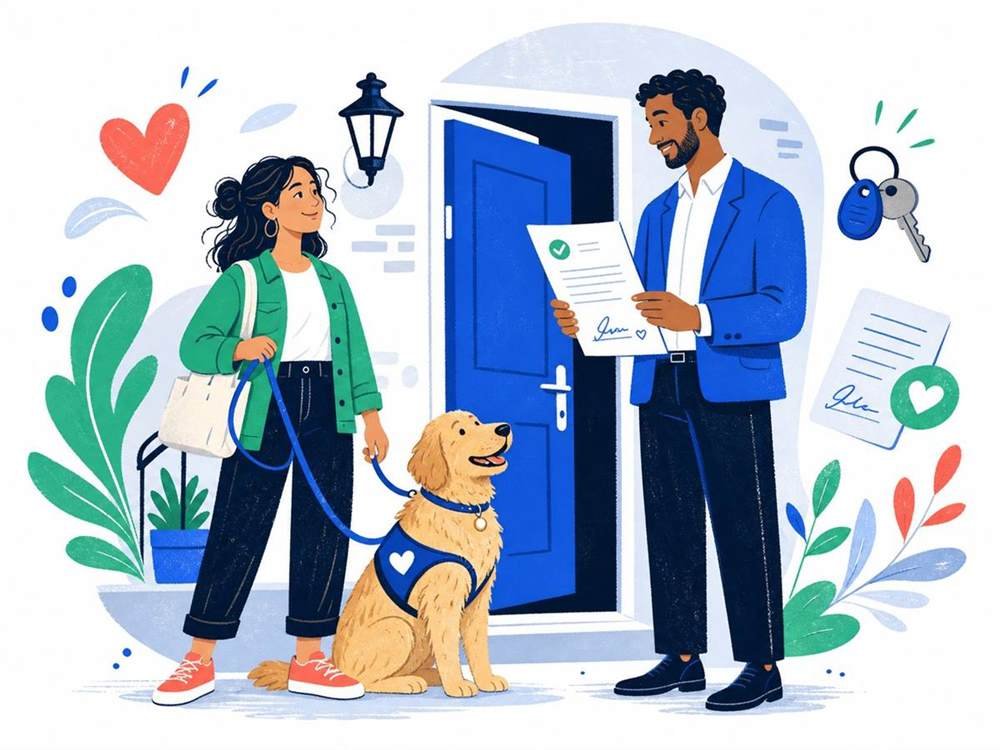
Housing confidence
Ready for the next conversation?
Explore a clinically grounded evaluation process and documentation designed to be understood and verified.
Check eligibility